
Discover why microalgae like spirulina and chlorella are considered sustainable superfoods rich in protein, antioxidants, and natural bioactive compounds.
Microalgae are increasingly recognized as one of the most promising sustainable superfoods of the future. These microscopic organisms are rich in nutrients, naturally occurring bioactive compounds, and plant-based protein. As global interest in functional nutrition continues to grow, microalgae such as spirulina and chlorella are gaining attention for their potential role in supporting daily wellness.
Beyond their nutritional value, microalgae are also known for their environmentally sustainable cultivation. They grow rapidly, require fewer natural resources than traditional crops, and can be produced with minimal environmental impact. This unique combination of nutrition, sustainability, and innovation has led many researchers to describe microalgae as a key component of future food systems.
What Are Microalgae?
Microalgae are microscopic photosynthetic organisms that naturally grow in freshwater and marine environments. Similar to plants, they use sunlight, water, and carbon dioxide to produce energy through photosynthesis.
Unlike many traditional crops, microalgae grow quickly and can produce high concentrations of nutrients within a small cultivation area. This efficiency makes them an attractive source of nutrition for the modern world.
Some key characteristics of microalgae include:
-
High nutrient density
-
Efficient photosynthetic growth
-
Sustainable cultivation potential
-
Rich natural pigments and bioactive compounds
Because of these properties, microalgae are increasingly studied for their potential applications in nutrition, biotechnology, and functional foods.
Spirulina: A Protein-Rich Blue-Green Microalgae
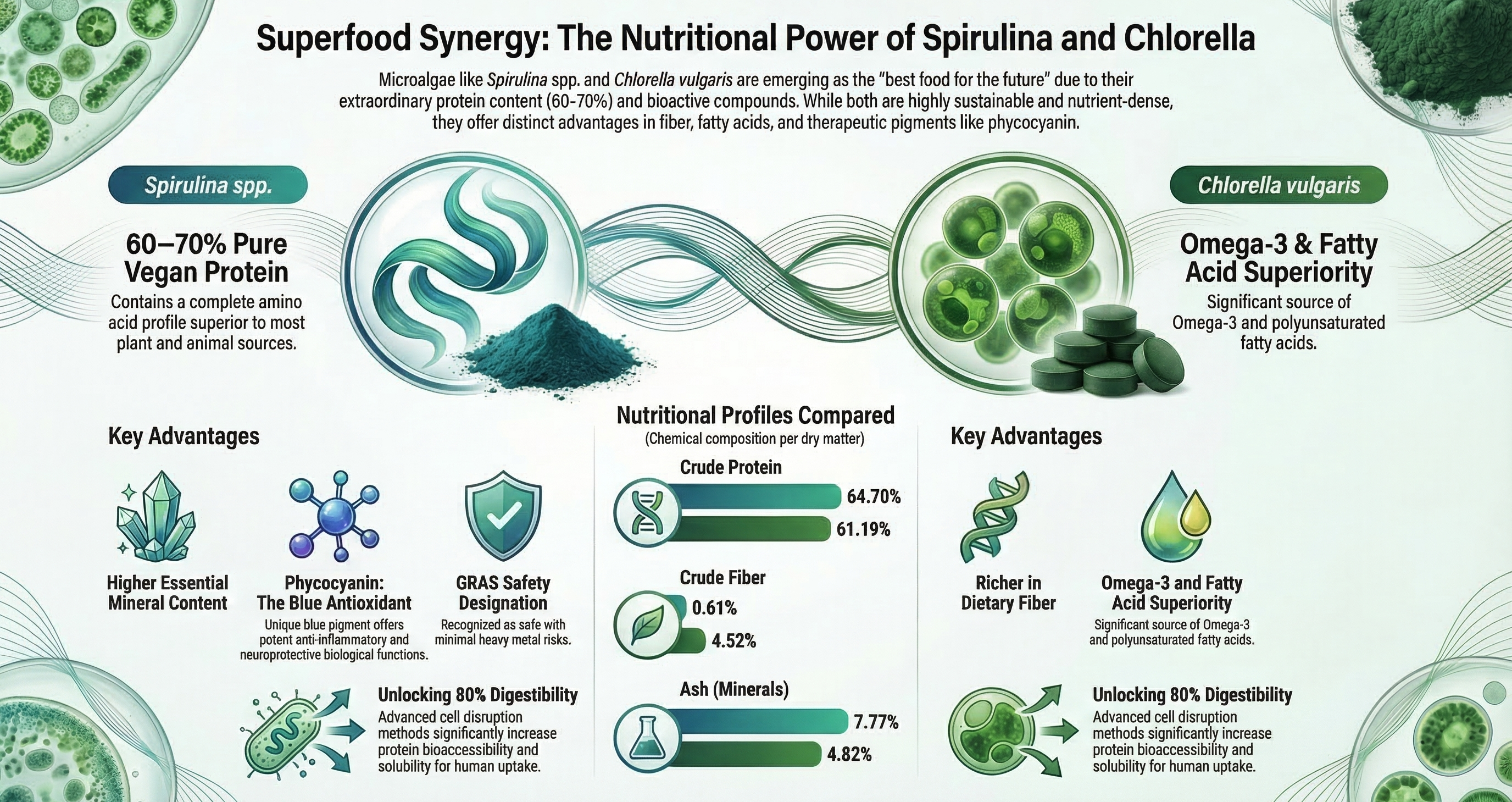
Spirulina is one of the most widely consumed microalgae worldwide. It is well known for its naturally high protein content and its unique blue pigment called phycocyanin, a compound widely studied for its antioxidant activity.
Spirulina typically contains:
-
Up to 60–70% plant-based protein
-
Essential amino acids
-
Natural antioxidants
-
Vitamins and minerals
These nutritional qualities make spirulina a popular choice among individuals seeking plant-based nutritional support.
Learn more about our spirulina and chlorella products here:
https://store.febico.com/organic-spirulina-chlorella/
Chlorella: A Chlorophyll-Rich Green Microalgae
Chlorella is another highly valued microalgae species known for its naturally rich chlorophyll content and balanced nutritional composition.
Chlorella contains:
-
Chlorophyll
-
Dietary fiber
-
Vitamins and minerals
-
Essential fatty acids
One unique feature of chlorella is its strong cell wall structure. Advanced processing technologies are often used to break the cell wall, improving nutrient accessibility and digestibility.
Explore our premium chlorella product series here:
https://store.febico.com/biophyto-premium-spirulina-chlorella/
Why Microalgae Are Considered the Food of the Future
Researchers and nutrition experts increasingly recognize microalgae as a promising future food source due to their combination of nutritional richness and sustainable cultivation.
High Nutrient Density
Microalgae are naturally rich in protein, antioxidants, and essential micronutrients, making them a valuable addition to modern diets.
Sustainable Food Production
Compared to conventional agriculture, microalgae cultivation requires:
-
Less land
-
Less water
-
Faster growth cycles
-
Lower environmental impact
These advantages make microalgae an appealing solution for addressing global food sustainability challenges.
Bioactive Compounds
Microalgae contain naturally occurring compounds such as:
-
Phycocyanin
-
Chlorophyll
-
Carotenoids
These compounds are widely studied for their potential antioxidant properties.
How Microalgae Are Consumed Today
Today, microalgae are commonly incorporated into daily nutrition through various forms, including:
-
Tablets
-
Capsules
-
Powder supplements
-
Functional foods and beverages
With their nutrient density and sustainable production advantages, microalgae are becoming an increasingly popular choice for individuals interested in plant-based nutrition and wellness support.
Frequently Asked Questions About Microalgae
What is the difference between spirulina and chlorella?
Spirulina is a blue-green microalgae known for its high protein content and phycocyanin pigment. Chlorella is a green microalgae rich in chlorophyll and dietary nutrients. Both are commonly used in nutritional supplements.
Are microalgae considered sustainable?
Yes. Microalgae cultivation is often considered environmentally sustainable because it requires fewer natural resources compared to many traditional crops.
Why are microalgae called a superfood?
Microalgae are sometimes referred to as a superfood due to their high nutrient density, including plant-based protein, vitamins, minerals, and natural bioactive compounds.
Learn more about microalgae research and cultivation:
https://www.febico.com/en/health-library/
Explore FEBICO’s premium microalgae products and discover the benefits of spirulina and chlorella for your daily nutrition.
Organic Spirulina & Chlorella Series
https://store.febico.com/organic-spirulina-chlorella/
Biophyto Premium Microalgae Series
https://store.febico.com/biophyto-premium-spirulina-chlorella/